

If you own a business in New York and your website was built on a generic template, you are competing at a disadvantage. Custom website design New York businesses need is not just a prettier layout. It is a strategically built digital presence that earns trust, ranks in search results, and converts visitors into paying customers. This guide is for small to mid-sized New York business owners who want to understand why templates fall short, what a custom approach actually involves, and how to make a smart decision about their next website.
Key Takeaways
- Templates limit your ability to differentiate in a saturated New York market where every industry has dozens of local competitors.
- Custom website design built for your brand, audience, and goals consistently outperforms template sites in search rankings and conversion rates.
- The most common mistakes are skipping the planning phase, ignoring mobile performance, and treating SEO as an afterthought.
- Practical audits and targeted fixes can recover a struggling website without starting completely from scratch.
- Comparing options on cost, timeline, and long-term ROI gives you a clearer basis for your investment decision.
Why This Matters Right Now
New York City is one of the most competitive local markets in the world. Across every borough and surrounding area, businesses in every industry are fighting for the same search placements, the same first impressions, and the same customer decisions.
What Changed Recently
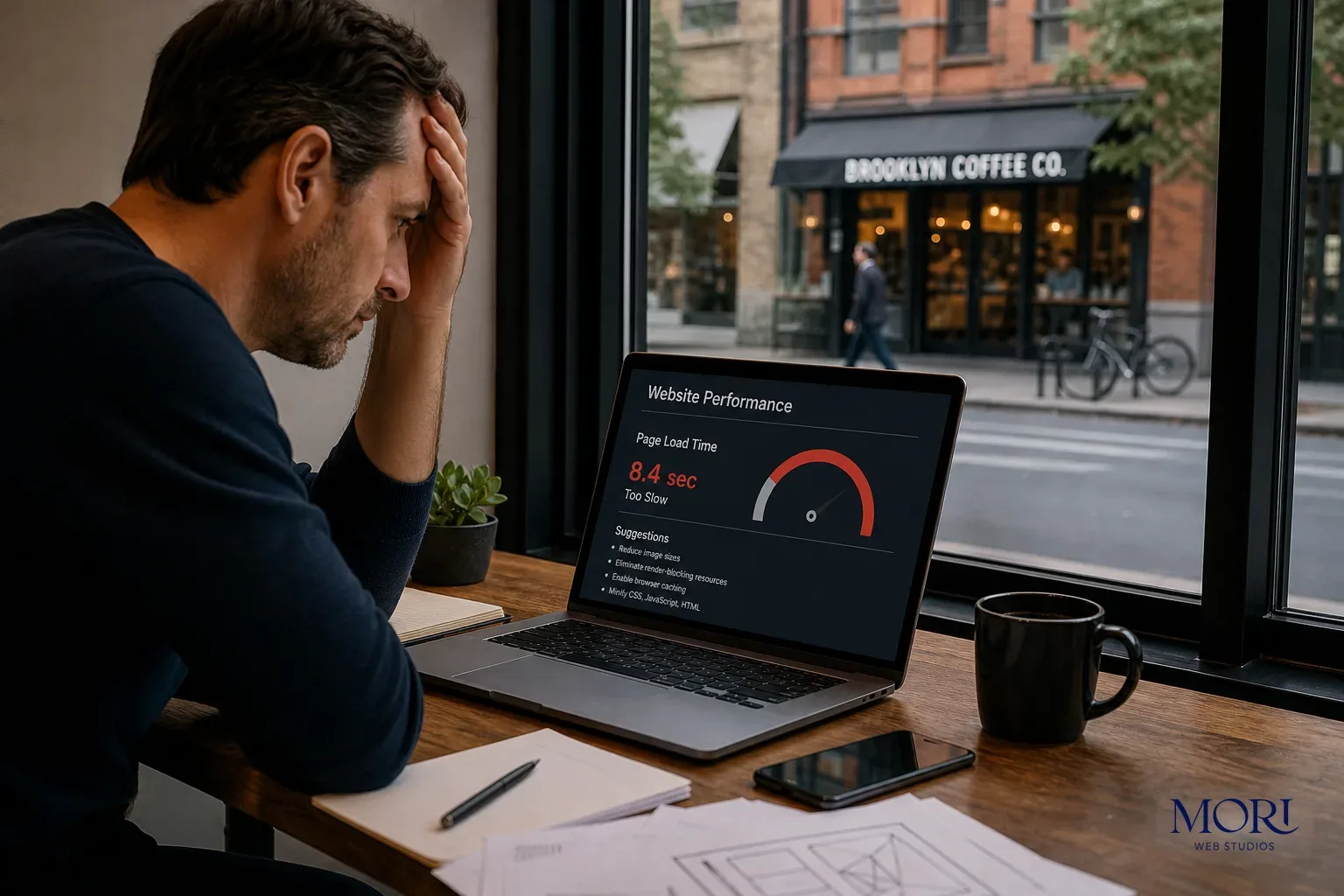
Google’s search algorithm continues to prioritize Core Web Vitals, page experience signals, and content relevance. A Squarespace or Wix template that loaded acceptably in 2022 may now be dragging your search rankings down because it cannot be optimized at the code level. Speed, structure, and technical precision now have a direct impact on whether your business appears on page one or page five.
AI search systems like Google’s AI Overviews, ChatGPT, and Perplexity are also reshaping how New York businesses get discovered. Sites with clear entity structure, authoritative content, and semantic markup are far more likely to be cited in AI-generated answers. A template site typically lacks the structural flexibility to implement these optimizations properly.
That is why integrating SEO into web design from the start is no longer optional for businesses that want to stay visible in 2026.
What Readers Should Grasp First
The core issue is not that templates are inherently bad tools. The issue is that they were built for everyone, which means they were optimized for no one in particular. Your business in Queens, Brooklyn, or the Hudson Valley has a specific audience, a specific competitive landscape, and specific trust signals that matter to your potential customers.
A template cannot account for any of that without significant custom development work that often costs as much as building from scratch.
Custom website design for New York businesses means building a site engineered around your specific audience, your competitive market, and your measurable business goals, not around a template vendor’s design constraints.
Common Mistakes That Waste Time and Money
Most New York businesses that struggle with their websites made the same preventable decisions early in the process.
Planning Errors to Avoid
The biggest planning mistake is treating your website as a brochure rather than a business asset. Many owners choose a template based on visual appeal, then spend months trying to make it fit their actual business needs. A custom build starts with audience research, competitive analysis, and a defined conversion path before a single design element is chosen.
An other common error is separating website design from SEO. By the time a template site is live, the URL structure, heading hierarchy, and page speed issues are baked in and difficult to fix without rebuilding. Learn more about what to expect from professional web design services before signing any contract so you know what questions to ask.
Early Warning Signs
Watch for these signals that your current website is underperforming:
- Bounce rates above 70% on key landing pages
- Mobile load times exceeding 3 seconds
- No organic traffic growth in the past 6 months
- Contact form submissions or calls below your conversion expectations
- No structured data or local schema markup visible in a Google Search Console audit
If two or more of these apply, you are losing leads to competitors with better-built sites.
How to Recover Quickly
You do not always need a full rebuild immediately. A focused audit can identify which problems are fixable without replacing the entire site and which ones require a structural solution. Prioritize page speed, mobile responsiveness, and local schema first.
Those three factors carry the most weight in local New York search results and can be improved in weeks rather than months.
Practical Improvements You Can Make Today
Knowing where to focus saves you from spending money on changes that do not move the needle.
Audit Your Current Approach
Start with Google Search Console and Google PageSpeed Insights. Both are free and give you immediate data on crawl errors, Core Web Vitals scores, and which pages are indexed. A truly responsive website is not just one that resizes on mobile.
It is one where the layout, font sizes, tap targets, and load sequence are all engineered for the device and connection speed your visitors actually use.
Cross-reference your analytics against your competitor rankings for your primary service keywords. If competitors consistently outrank you on searches like "electrician Brooklyn" or "family law attorney Manhattan," that gap is almost always tied to a combination of content depth, technical structure, and domain authority that template sites cannot bridge without custom development.
Highest-Impact Fixes First
| Fix | Estimated Impact | Complexity |
|---|---|---|
| Compress and serve images in WebP format | High (speed, Core Web Vitals) | Low |
| Add local business schema markup | High (local search, AI citations) | Medium |
| Rewrite title tags and meta descriptions | Medium (click-through rate) | Low |
| Fix broken internal links and 404 errors | Medium (crawlability) | Low |
| Migrate to a custom-built theme or framework | Very High (all factors) | High |
The first four fixes can be applied to an existing template site. The fifth is where you need to honestly evaluate whether patching a template is more cost-effective than investing in a custom design that solves the root problem.
How to Track Progress
Set a 90-day measurement window. Track organic impressions, clicks, and average position in Google Search Console. Monitor Core Web Vitals monthly.
If you are running local campaigns, track calls and direction requests in your Google Business Profile. Use these metrics to decide whether incremental fixes are generating returns or whether a complete rebuild is the stronger investment.
Tools, Examples, and Proof Points
Workflows That Work
Effective custom design projects follow a structured process: discovery and goal-setting, competitive research, wireframing, design, development, SEO integration, testing, and launch. Each phase builds on the last, and skipping any phase creates problems downstream. The discovery phase alone typically reveals audience insights and keyword opportunities that change the direction of the site significantly.
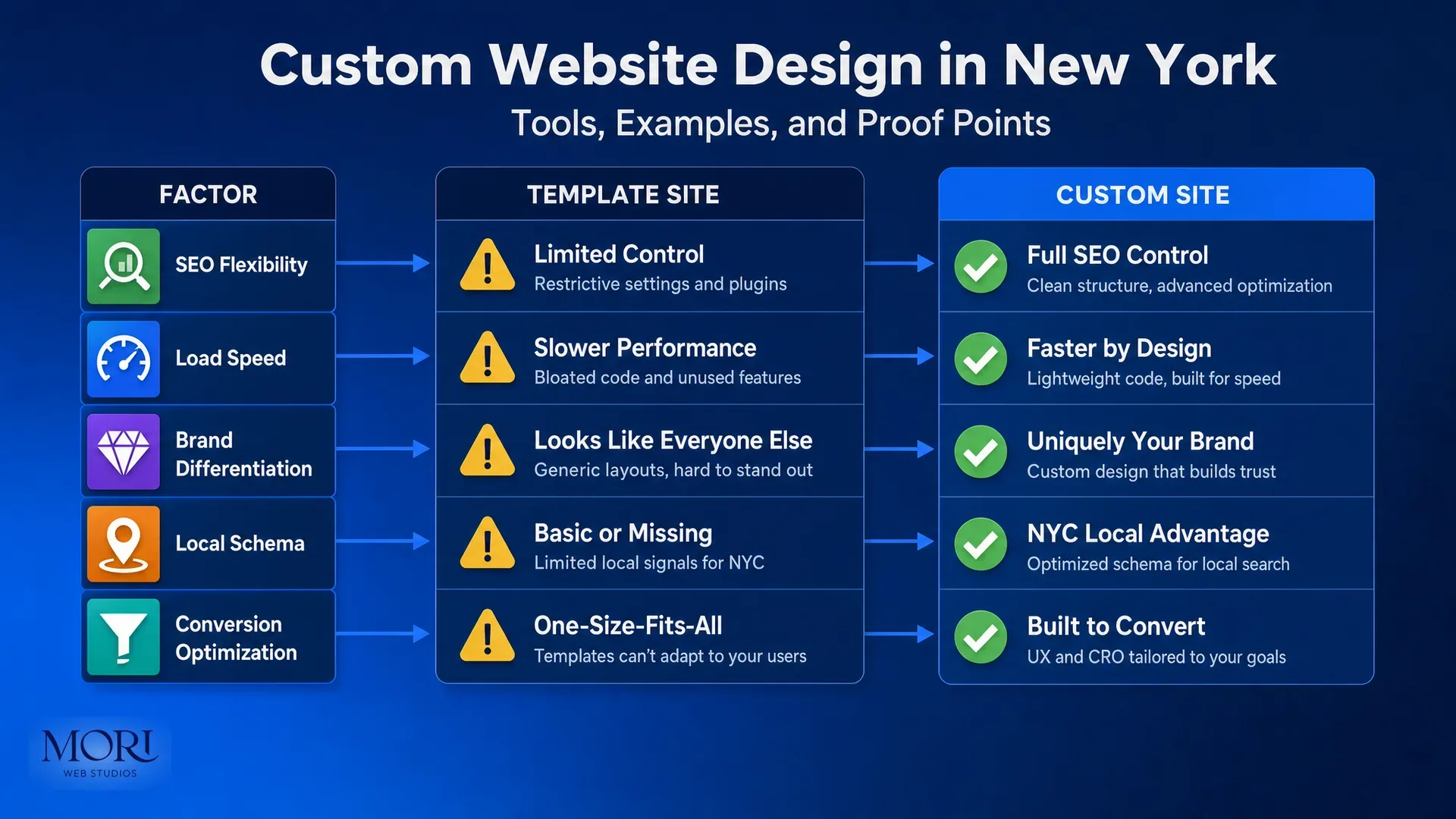
A strong web design and development process also incorporates your branding identity from day one. If your logo, color palette, and brand voice are not defined before design starts, you will be redesigning sections repeatedly as those elements become clear. Bringing logo design and branding into the same project scope prevents that cycle.
Real-World Scenarios
Consider a New York-based service business that switches from a Wix template to a custom-built WordPress site with local schema, optimized Core Web Vitals, and a conversion-focused contact page. The structural changes alone can dramatically improve visibility for neighborhood-level search terms that a template site could not target precisely. This kind of result is not guaranteed by any agency, but it is consistently driven by the same technical and strategic factors.
Template sites also struggle with multi-location targeting. If your business serves clients in Manhattan, the Bronx, and Westchester, a custom site can build out properly structured service-area pages for each location. A template typically forces you to either duplicate generic content or leave those location keywords entirely unclaimed.
How to Compare Your Options
Decision Criteria
Before choosing between a template update, a partial redesign, or a full custom build, evaluate four factors: your current organic traffic trend, your conversion rate on key pages, your competitive position for primary keywords, and your 12-month growth targets. If any two of these are moving in the wrong direction, a template patch is unlikely to reverse the trend.
Cost, Effort, and Timeline Tradeoffs
| Approach | Typical Timeline | Relative Cost | Best Suited For |
|---|---|---|---|
| Template update or patch | 2, 4 weeks | Low | Minor content or speed fixes |
| Partial redesign on existing platform | 4, 8 weeks | Medium | Conversion optimization, rebrand |
| Full custom build | 8, 16 weeks | High | Competitive markets, growth goals |
| Custom build with SEO integration | 10, 20 weeks | High | Long-term lead generation, local SEO |
The cost of doing nothing is also real. A website that underperforms costs you leads every month it sits without improvement. If you want to estimate what a custom project might cost for your specific business, the website cost estimator at Mori Web Studios gives you a starting point based on your actual scope.
Putting the Plan Together
Main Points to Remember
Custom website design New York businesses rely on is not a luxury purchase. It is a strategic business decision with measurable returns in search visibility, lead generation, and brand credibility. Templates served a purpose when the web was simpler.
The 2026 search environment, with AI-driven discovery and intensely competitive local markets, requires a site built with intention.
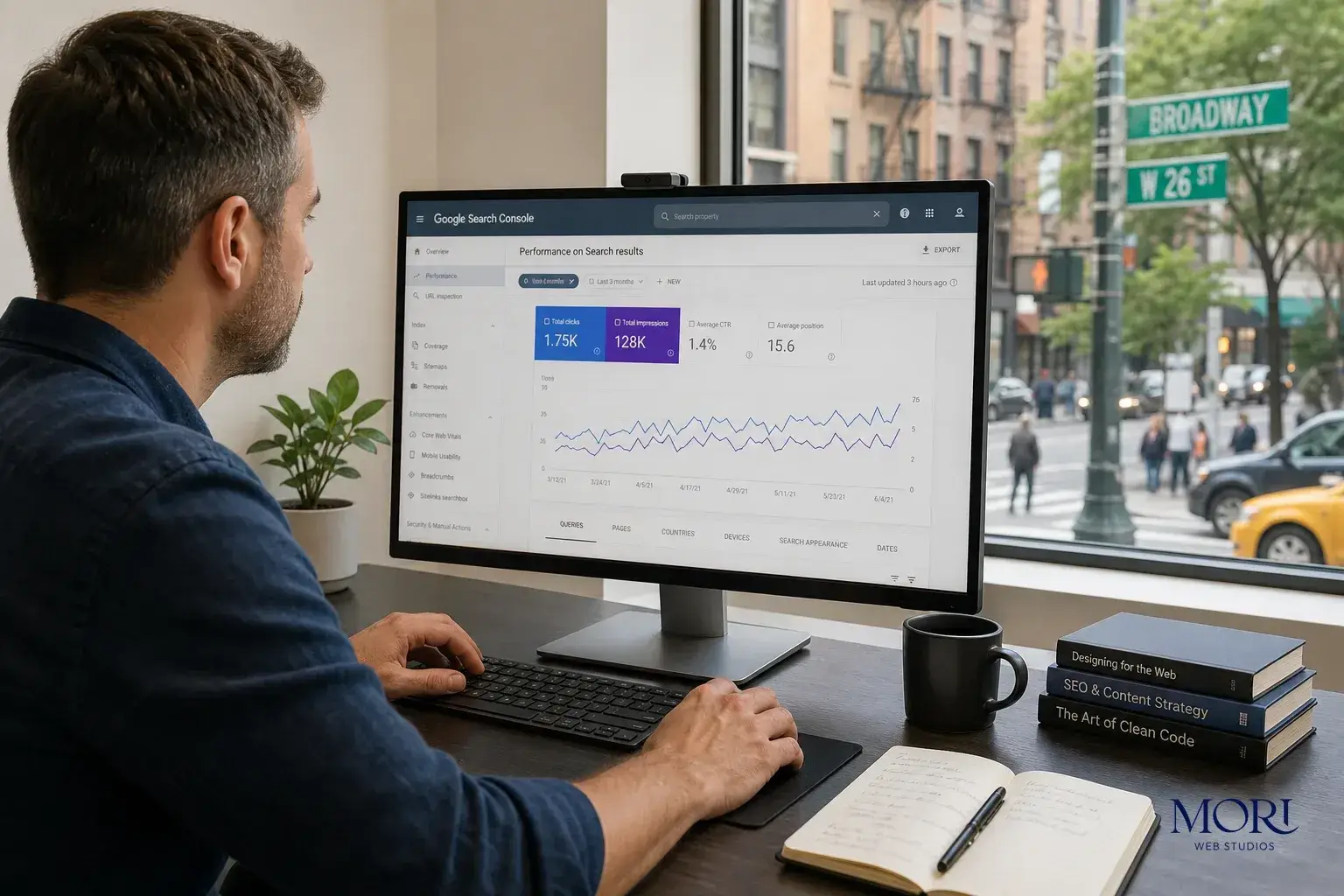
Your competitors in New York are not standing still. Agencies serving businesses across the five boroughs and surrounding areas are actively building structured, fast, conversion-focused sites that claim the rankings you want. The technical bar is rising every year, and the gap between a custom-built site and a template site is widening, not narrowing.
What to Do Next
Start with an honest audit of your current site’s performance. Identify the highest-impact gaps. Then decide whether those gaps require targeted fixes or a complete rebuild.
If you need an outside perspective on where your site stands and what it would take to compete effectively, contact Mori Web Studios for a professional assessment. The team works with New York businesses of every size to build digital presences that earn rankings, generate leads, and support sustainable growth.
Frequently Asked Questions
What is custom website design and why does it matter for New York businesses?
Custom website design means your site is built specifically for your business, audience, and goals rather than adapted from a pre-made template. For New York businesses, this distinction is significant because the market is dense and competitive. A custom site gives you precise control over SEO structure, brand presentation, page speed, and conversion flows in ways a template cannot match.
How much does custom website design in New York typically cost?
Project andProject costs vary widely based on scope, functionality, and the complexity of your design requirements. A basic custom site for a service business might start around $3,000 to $6,000, while a larger project with e-commerce, SEO integration, and multiple service-area pages can reach $10,000 to $25,000 or more. The best way to get an accurate range for your specific situation is to use the website cost estimator and outline your actual needs before comparing agency quotes.
How long does a custom website design project take?
Most custom builds for small to mid-sized New York businesses take between 8 and 16 weeks from discovery to launch. Projects that include branding, extensive content creation, or e-commerce functionality typically run closer to the longer end. Planning and clear scope definition at the start have more impact on timeline than any other single factor.
Can a custom website actually improve my search rankings?
Yes, and the mechanism is direct. Custom development allows your technical SEO foundation to be built correctly from day one: clean URL structure, proper heading hierarchy, fast load times, local schema markup, and mobile optimization. These are the exact factors Google uses to evaluate and rank local business websites.
Templates often create technical constraints that prevent you from implementing these elements properly, which is why so many template-based sites plateau in search performance regardless of how much content is added.
What is the difference between a website redesign and a full custom build?
A website redesign typically means updating the visual design, content, or layout of an existing site, often on the same platform. A full custom build starts from a clean foundation, usually on a framework or CMS configured specifically for your business. Redesigns are faster and less expensive but may not resolve underlying technical or structural problems.
A custom build is the better choice when your current platform is limiting your SEO potential or your conversion performance. Learn more about when each approach makes sense on the web design and development solutions page.
How do I know if my current website is hurting my business?
The clearest indicators are declining or flat organic traffic, a high bounce rate on your most important pages, and a conversion rate that does not reflect the quality of your service. Run a free audit through Google Search Console and Google PageSpeed Insights. If your Core Web Vitals are failing, your mobile experience is poor, or your site is not appearing for your primary local keywords, those are concrete signals that your current site is costing you leads every month.
Should I hire a local New York web design agency or work with a remote team?
Both can deliver strong results, but a local agency brings specific advantages for businesses targeting New York customers. They understand the competitive dynamics of individual boroughs and neighborhoods, can align your content with hyperlocal search intent, and are more accessible for ongoing collaboration. If local SEO is a core goal, working with a team that has hands-on experience in the New York City market is a meaningful advantage.
Mori Web Studios works with businesses across the five boroughs and surrounding areas, including clients in New York City and the broader metro region.